Light, circadian biology, and cardioprotection
Two decades of work tracing how light and the body's internal clock shape recovery from cardiac and lung injury.
From light exposure to cardioprotection
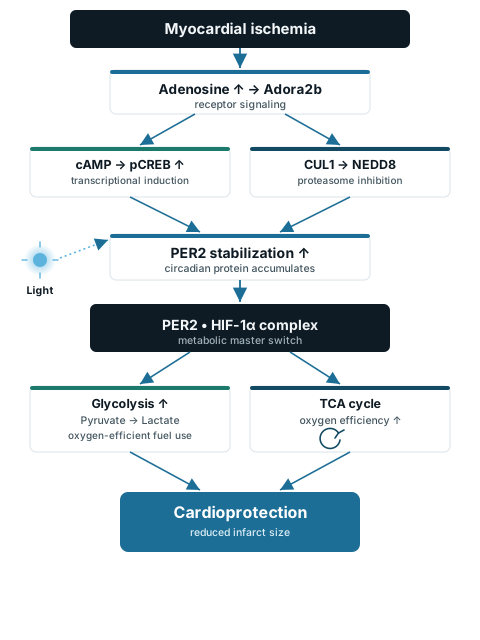
The Adora2b–Per2–HIF-1α discovery
This 2012 study identified the circadian protein Per2 as the missing link between adenosine receptor signaling and the heart's ability to switch to oxygen-efficient glycolysis during ischemia — and showed that exposing mice to intense light could stabilize cardiac Per2 and reduce infarct size. It remains Dr. Eckle's most-cited paper and the foundation for his light-therapy research program.
Areas of research interest
Endothelial metabolic reprogramming
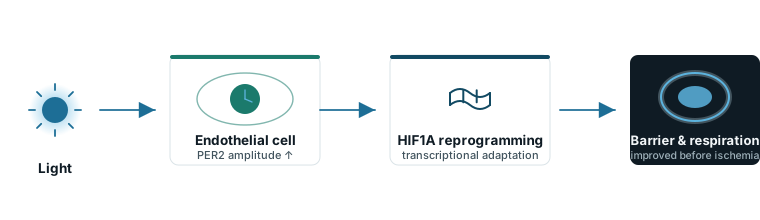
Intense light increases the circadian amplitude of the clock protein PER2, which preconditions the heart by reprogramming the endothelium through adenosine and HIF1A signaling — strengthening the endothelial barrier and improving mitochondrial respiration before an ischemic event.
Circadian ANGPTL4 in cardiovascular disease
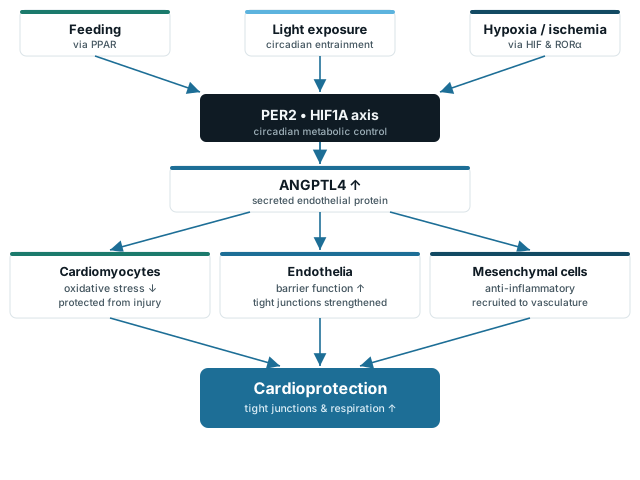
Original figures from Dr. Eckle's Forum article in Trends in Molecular Medicine, outlining how circadian ANGPTL4 signaling protects the heart and vasculature.